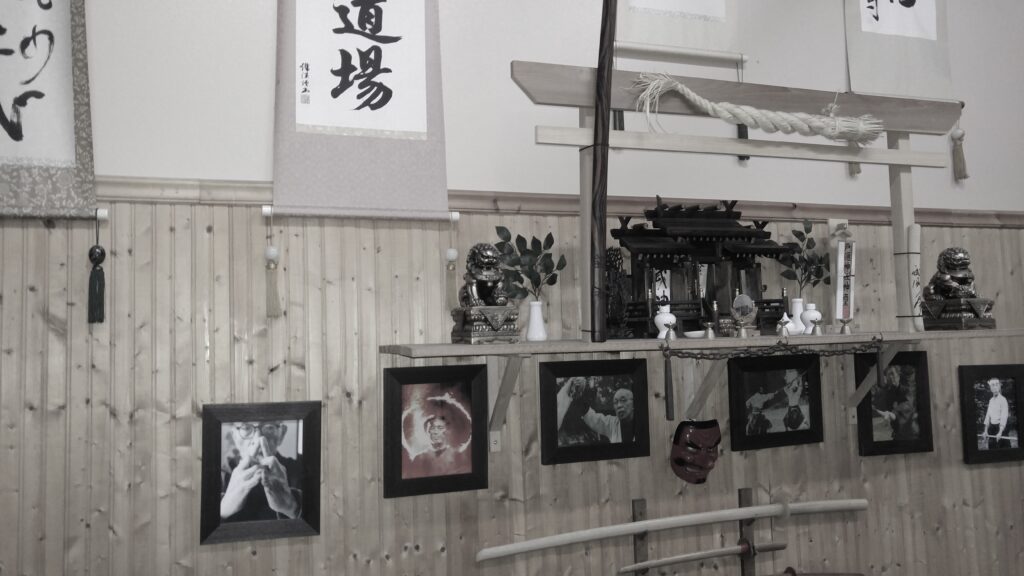
About the Bujinkan
The Bujinkan is an international martial arts organization based in Japan, founded and led by Dr. Masaaki Hatsumi, the 34th Grandmaster of Togakure-ryū Ninpō.
The Bujinkan system encompasses nine classical ryūha (martial traditions), collectively known as Bujinkan Budō Taijutsu. While often associated with ninjutsu, the art goes far beyond that single aspect. Hatsumi-sensei emphasizes the term Budō (“martial way”), as these traditions descend from both samurai schools, which focused on battlefield tactics, and ninja schools, which specialized in strategy, adaptability, and unconventional methods.
Together, these nine schools form a comprehensive martial system that preserves the lessons of Japan’s warrior heritage while offering timeless principles for modern practice.
Masaaki Hatsumi retired from training in 2020 and names new soke of the 9 Bujinkan schools.
About Sōke Masaaki Hatsumi
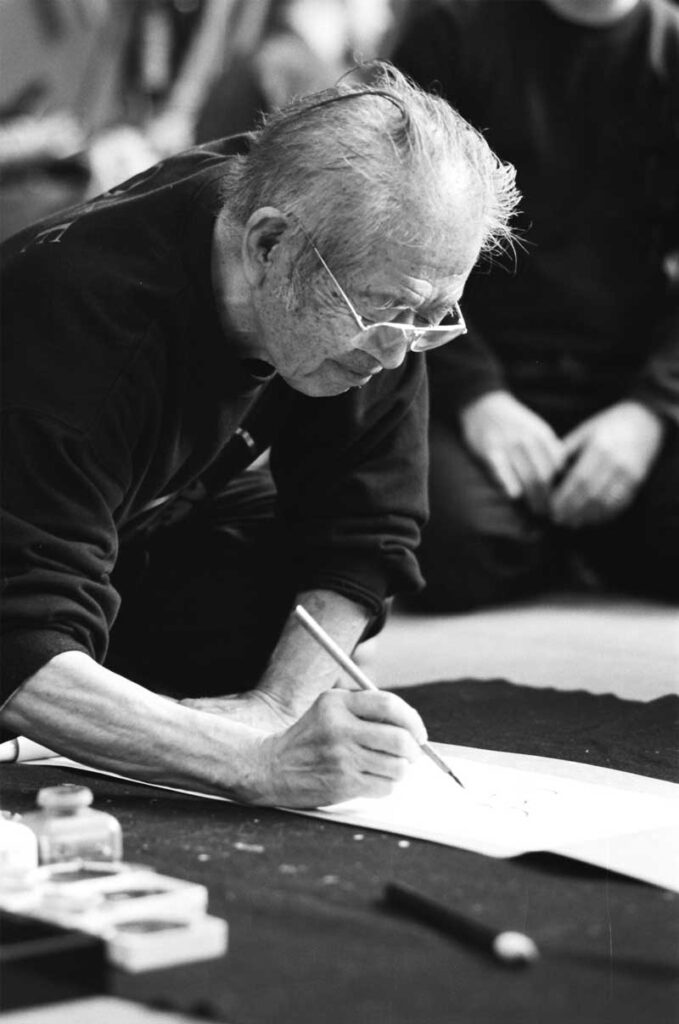
Dr. Masaaki Hatsumi (born December 2, 1931, in Noda City, Chiba Prefecture) is the inheriting Sōke (grandmaster) of nine classical martial traditions and the founder of the Bujinkan Dōjō. His warrior names include Yoshikai, Tetsuzan, and Hisamune. Hatsumi-sensei began his martial arts journey at the age of seven, training in a wide variety of disciplines before becoming the sole successor to Toshitsugu Takamatsu, the 33rd Grandmaster of Togakure-ryū Ninpō.
For the last 15 years of Takamatsu-sensei’s life, Hatsumi received intensive personal instruction, inheriting the nine ryūha that form the basis of Bujinkan Budō Taijutsu. Upon Takamatsu’s passing in 1972, Hatsumi became the 34th Sōke of these traditions, carrying forward an unbroken lineage of samurai and ninja arts.
The Bujinkan Hombu Dōjō, known as the Bujinden (“Divine Hall”), is located in Noda City, where Hatsumi-sensei continues to guide training and serve as International Director. His wife, Mariko, is a celebrated Japanese dance instructor and holds the title of 10th Dan, overseeing women’s training in the Bujinkan.
In addition to his martial achievements, Hatsumi-sensei holds a degree in theater studies from Meiji University and is trained in osteopathic medicine. He ran a successful bone-setting clinic until the demands of international teaching and media work became his full-time focus.
A prolific writer and teacher, Hatsumi-sensei has authored more than a dozen books and produced over 40 instructional films on ninjutsu and budō. His writings and teachings have been featured in martial arts publications worldwide. He also created and starred in the popular Japanese television series Jiraiya and has worked extensively in film and theater as a consultant, ensuring historically accurate portrayals of martial arts.
Hatsumi-sensei is also an accomplished musician, singer, and former nightclub performer, showcasing his creative talents beyond martial training. His contributions to culture, martial arts, and education have earned him widespread recognition, including:
- Honorary Doctorates in Human Sciences and Philosophy (USA)
- Knighthood from Germany
- Black Belt Magazine’s Instructor of the Year
- Honorary Texas Ranger
- Honorable citizenships from multiple international cities
- Japan’s highest cultural honor, the Bunka-shō (Cultural Award), personally awarded by the Emperor of Japan in 2000
Today, Sōke Masaaki Hatsumi remains one of the most influential martial artists in the world, a teacher of teachers, and a living link to Japan’s warrior heritage. HE is currently retired and living in Noda.
About Bujinkan Maru no Ichi Dōjō
The Bujinkan is a living warrior tradition, and at Maru no Ichi Dōjō we dedicate ourselves to preserving and transmitting its teachings with sincerity and respect. Our instructors maintain a direct connection to Japan, traveling regularly to train at the Honbu Dōjō under the Sokes of the 9 schools.
Training is held four days a week. Each class follows the same curriculum taught in Japan and lasts approximately two hours, allowing for deep study and steady progress.
No prior martial arts experience or exceptional physical ability is required. What matters most is a willingness to learn. We ask students to approach training with an empty cup—open, humble, and ready to absorb the lessons of these ancient traditions.
Above all, our goal is to foster an environment where students can enjoy training, strengthen their health, and persevere on the martial path.